Does Tracking Workouts Actually Help? What 11 Studies Show
Does tracking your workouts actually lead to better results — or is it just busywork between sets? If you've ever wondered whether keeping a workout log makes a real difference, the research is surprisingly clear.
People who track their training get meaningfully better results than people who don't. They train more often, progress faster, and stick with it longer. And the reasons go deeper than just "knowing your numbers."
Here's what 11 peer-reviewed studies actually show about workout tracking benefits — and what it means for how you train.
People Who Track Their Workouts Train More Often
The most consistent finding across decades of exercise science is deceptively simple: the act of recording what you do changes what you do.
A foundational study published in Research Quarterly for Exercise and Sport found that subjects who self-monitored their workouts exercised significantly more often — averaging 2.07 sessions per week compared to 1.36 for the control group. The monitoring group also showed meaningful improvements in predicted VO₂ max, while the control group didn't improve at all (Webber et al., 1990).
That's a 52% increase in training frequency just from keeping a workout log. Not from a new program. Not from a new supplement. From paying attention.
This isn't an isolated finding. A 2024 systematic review in Behavioral Sciences analyzed the behavior change techniques used across 70+ physical activity interventions and found that workout tracking was one of the top five most effective strategies — showing a statistically significant positive effect (β = 0.8, p = 0.033) in meta-regression analyses (Wan et al., 2024). Across a huge body of research, tracking consistently moves the needle.
Why a Workout Log Improves Strength and Muscle Gains
So why does writing down "3×8 bench at 185" make you stronger? It's not magic. The research points to a few concrete mechanisms.
Self-efficacy. When you can look back at your workout journal and see that your squat went from 185 to 225 over four months, you believe you can get to 275. That confidence isn't just a nice feeling — self-efficacy is one of the strongest predictors of long-term exercise adherence in the literature. A review from IDEA Health & Fitness Association confirmed that reviewing past progress builds confidence, enhances motivation, and makes it easier to set specific goals that boost performance (IDEA Fitness, 2023).
Goal specificity. A vague goal like "get stronger" produces vague effort. But when you're tracking and you can see that you hit 205×6 last week on bench, the next session has a clear target: 205×7 or 210×6. Research consistently shows that specific, challenging goals outperform general "do your best" goals — and a workout log is what makes specificity possible.
Accountability loops. When you know the data is there, you behave differently. You don't skip the last set because it'll show up as a gap. You don't sandbag the weight because you'll see the regression. The log becomes a quiet accountability partner that asks for nothing except honesty.
Digital Gym Trackers Work Better Than Paper Journals
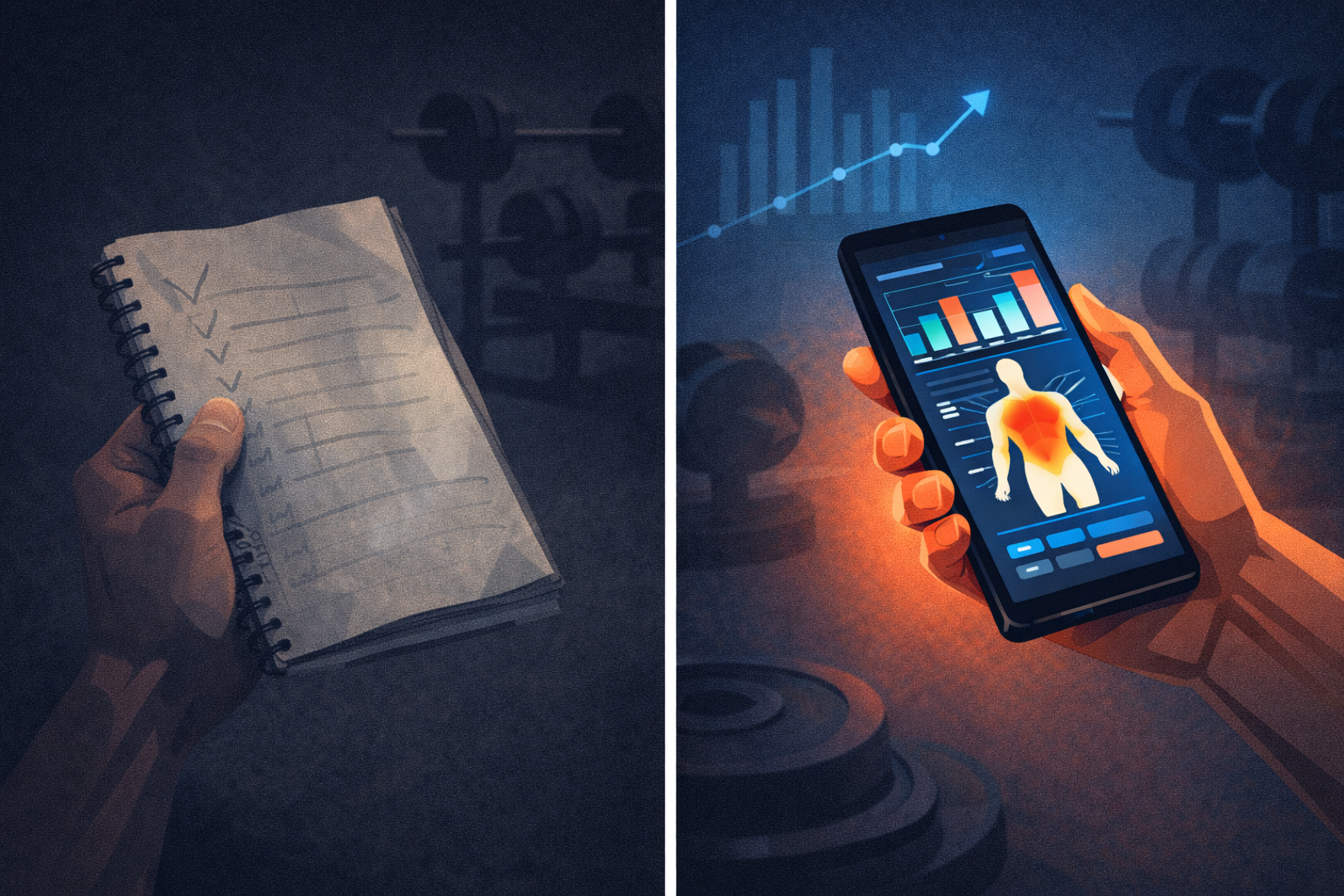
The original research used paper workout journals. They worked. But digital fitness tracking tools appear to work better.
A 2022 meta-analysis in The Lancet Digital Health evaluated wearable activity trackers and found that they improved physical activity outcomes (standardized mean difference of 0.3–0.6), body composition (SMD 0.7–2.0), and cardiorespiratory fitness (SMD 0.3) across multiple studies (Ferguson et al., 2022). A 2025 systematic review in npj Digital Medicine confirmed these findings, showing that standalone digital behavior change interventions significantly improved physical activity (SMD = 0.324) — with tracking and feedback being the most frequently used techniques among effective interventions (Lee & Park, 2025).
Why the boost? Digital tools reduce friction — you're already carrying your phone. They provide instant feedback through charts and trends. And a good gym tracker app can automate things paper can't: calculating volume load, mapping muscle group distribution, or flagging when a lift has stalled.
A 2019 meta-analysis on self-monitoring found that interventions using objective, digital monitoring tools showed significant improvements, while those relying on subjective self-report didn't reach significance (Compernolle et al., 2019). The tool matters.
Tracking Makes Progressive Overload Actually Happen
Here's the practical payoff. Progressive overload — gradually increasing the demands on your muscles over time — is the single most important principle in strength training. Every credible training program is built on it. And without tracking, most people are terrible at it.
A 2022 study in PeerJ examined two different overload strategies and confirmed that both increasing load and increasing reps produced significant gains in strength and hypertrophy — but only when progression was systematically tracked and applied (Plotkin et al., 2022). A separate 2024 review of overload progression protocols reached a similar conclusion: structured, measurable progression drives results, while haphazard training does not (Bernárdez-Vázquez et al., 2024).
Think about your last few weeks of training. Do you know, precisely, what weight you used for incline dumbbell press two Wednesdays ago? What RPE it was? How many sets? If the answer is no, you're relying on memory and feel to drive progressive overload — and both are unreliable. You'll repeat weights you've already adapted to, skip progressions you were ready for, or vary your training randomly while thinking you're being consistent.
The workout log removes the guesswork. You open the app, see exactly what you did last time, and make a deliberate decision about what to do this time. That's how progress compounds.
Workout Tracking Creates a Feedback Loop That Keeps You Going
One of the more nuanced findings in the research is that tracking doesn't just improve performance — it improves adherence. People who track their workouts stick with their programs longer.
A systematic review in Behaviour & Information Technology examined the drivers and outcomes of fitness tracking behavior and found that it creates a positive feedback loop: tracking leads to awareness, which leads to goal-directed behavior, which leads to visible progress, which reinforces the tracking habit (Kari et al., 2020).
UCLA Health research supported this, finding that pairing fitness tracking with personalized guidance resulted in sustained improvements — but noted that without goal-setting and action planning components, trackers alone tend to produce only short-term changes (UCLA Health, 2023). The implication is clear: passive tracking isn't enough. You need an active system — one that helps you set targets, review progress, and make decisions based on the data.
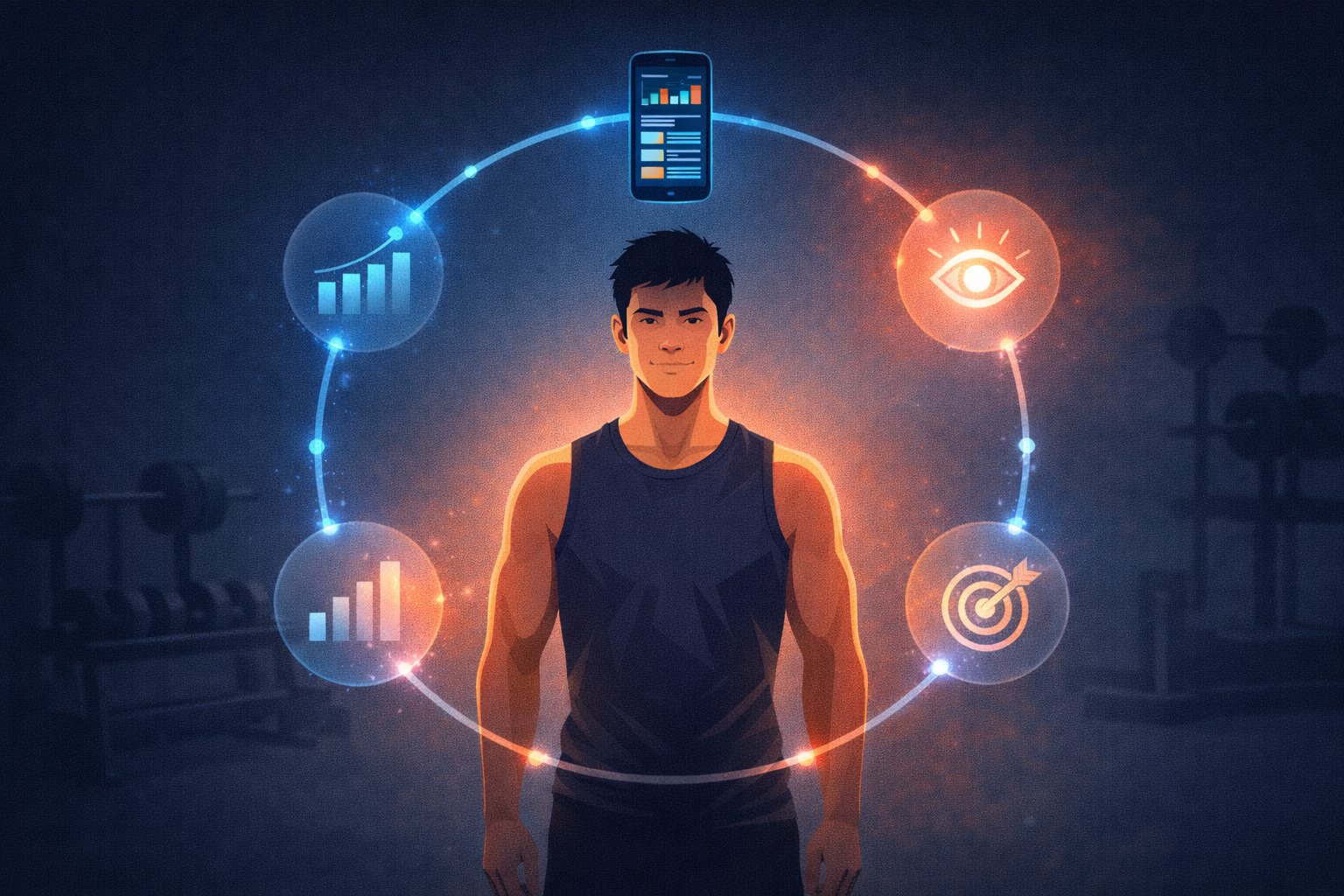
This is the difference between a step counter on your wrist and a workout tracker app that shows you exactly where you were, where you are, and where you should go next.
The Best Workout Tracker Is the One You'll Actually Use
A military weight management study found something interesting: participants who used their preferred tracking method were significantly more adherent to logging — 60.6% compliance vs. 31.2% for those who didn't prefer their tool. That's nearly double the adherence just from using a method you actually like (Shay et al., 2009).
This matters because a spreadsheet with 47 columns isn't better if you abandon it after a week. A paper journal isn't better if you leave it in your gym bag and never review it.
The tool needs to be fast enough that you'll use it between sets, intelligent enough to show you patterns you'd miss on your own, and engaging enough that opening it feels like a useful part of your training — not a chore. That's why I built Slate.
How Slate Makes Workout Tracking Effortless
Most workout apps treat logging as data entry. You scroll through exercise lists, tap tiny buttons, enter numbers one field at a time. It works, technically. But it's slow, and slow is why people stop tracking.
Slate was designed around the idea that tracking should take seconds, not minutes. A few things that make the difference:
Voice logging. Say "bench press 225 for 8, 8, 7" and Slate parses it, logs the sets, and moves on. No scrolling, no tapping, no putting down your phone between every set. This alone changes the experience — workout tracking becomes something you do naturally instead of something you endure.
8 input types. Not every exercise is weight-and-reps. Slate handles time-based sets, distance, bodyweight movements, and more without forcing you to hack everything into a reps field. Log a 60-second plank or a 2-mile run the same way you log a squat.
Smart defaults and history. When you start an exercise you've done before, Slate pre-loads your last session's numbers. You see exactly what you did — so progressive overload becomes a one-glance decision.
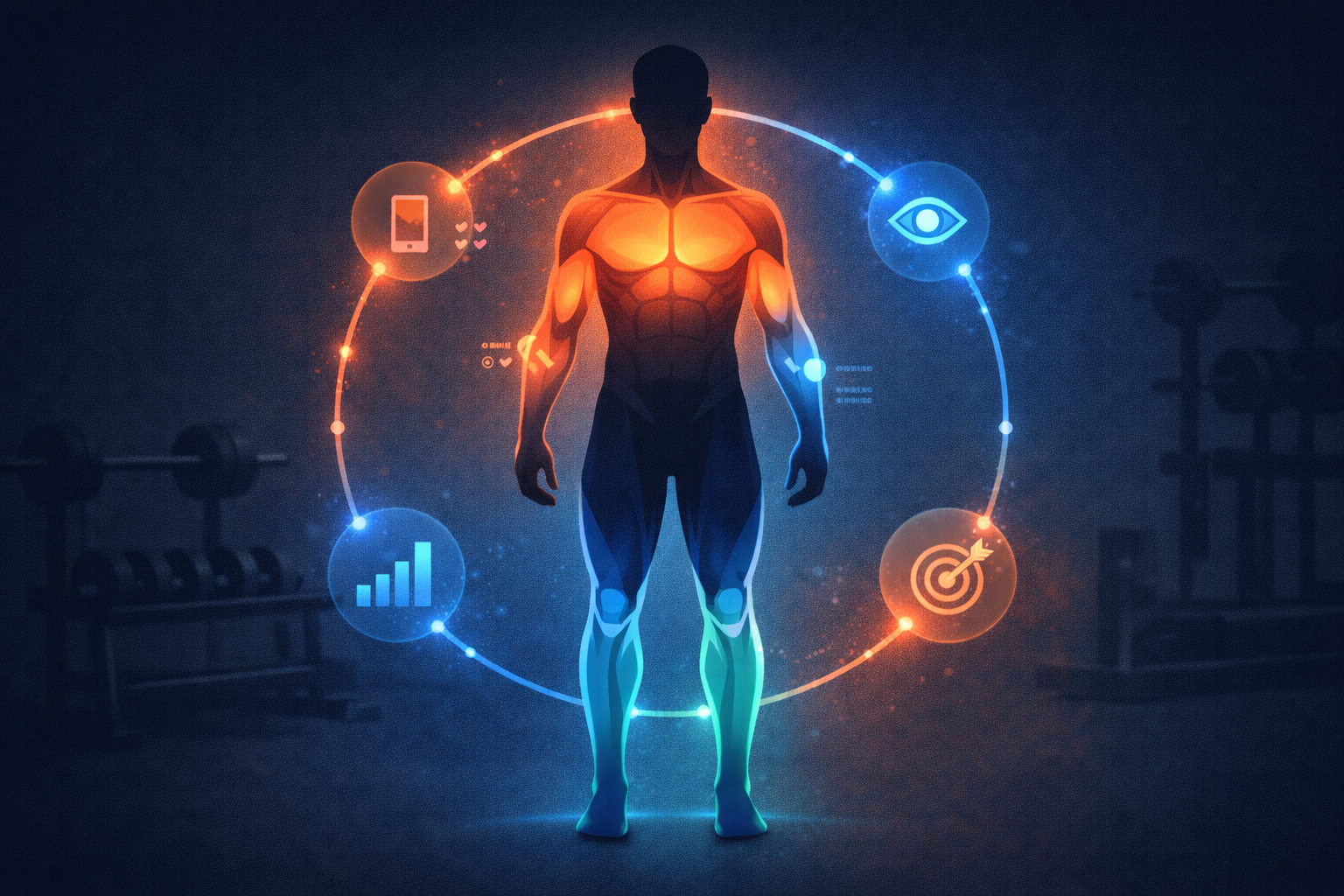
Muscle strain and recovery tracking. After every workout, Slate maps which muscles you trained onto a visual body heat map and models recovery time based on volume, intensity, and technique. Open the app on any day and you can see at a glance which muscle groups are fresh and which need more time. No mental math, no "chest Monday" regardless of what your body is telling you. We go deep on this in our recovery tracking guide.
AI workout generation. Tell Slate what you want in plain language — "upper body push day, 45 minutes, barbell and cables" — and it builds a complete session using EMG-based exercise science data. It's like having a training partner who actually knows exercise science and doesn't just hand you the same bro split every week.
DOTS scoring and strength standards. See where your lifts rank against population-level data, adjusted for body weight. It gives you context that makes your progress data more meaningful.
If you're currently using Hevy or Strong, Slate can import your full workout history so you don't lose a single rep of data.
The point isn't the feature list. The point is that Slate removes every friction point that makes people stop tracking — so you actually get the benefits the research describes.
What the Research Says: Track Your Workouts, Get Better Results
The evidence across 11 studies is consistent and it's not subtle. People who track their workouts:
- Train more frequently (52% more sessions per week in controlled studies)
- Progress more systematically through progressive overload
- Build stronger self-efficacy and motivation
- Adhere to their programs longer
- Make better training decisions based on data instead of feel
You don't need to become a data scientist. You don't need spreadsheets. You just need a system that captures what you do, shows you what it means, and makes it easy to decide what to do next.
Your muscles don't know what day it is. They know what happened to them and how long it's been. Start tracking — and let the data do the thinking.
Slate tracks every set, maps muscle strain and recovery, and generates AI-powered workouts from plain language — so you spend less time planning and more time progressing. Download Slate free on the App Store.
References
Webber, K. H., et al. (1990). "The Effects of Self-Monitoring and Reinforcement on Exercise Adherence." Research Quarterly for Exercise and Sport. PubMed
Wan, J., et al. (2024). "Effectiveness and Components of Health Behavior Interventions on Increasing Physical Activity." Behavioral Sciences, 14(12), 1224. MDPI
Ferguson, T., et al. (2022). "Effectiveness of wearable activity trackers to increase physical activity and improve health." The Lancet Digital Health. PubMed
Lee, S. A. & Park, J. H. (2025). "Systematic review and meta-analysis of standalone digital behavior change interventions on physical activity." npj Digital Medicine, 8, 436. Nature
Compernolle, S., et al. (2019). "Effectiveness of interventions using self-monitoring to reduce sedentary behavior in adults." Int. Journal of Behavioral Nutrition and Physical Activity. Springer
Plotkin, D. L., et al. (2022). "Progressive overload without progressing load? The effects of load or repetition progression on muscular adaptations." PeerJ. PubMed
Bernárdez-Vázquez, R., et al. (2024). "Effects of Resistance Training Overload Progression Protocols on Strength and Muscle Mass." Sports Medicine. PubMed
Kari, T., et al. (2020). "Self-tracking behaviour in physical activity: a systematic review of drivers and outcomes of fitness tracking." Behaviour & Information Technology. Taylor & Francis
UCLA Health (2023). "Are fitness trackers enough to keep you motivated and turn exercise into a habit?" UCLA Health
Shay, L. E., et al. (2009). "Adherence and weight loss outcomes associated with food-exercise diary preference in a military weight management program." Eating Behaviors. ScienceDirect
IDEA Health & Fitness Association (2023). "The Science of Self-Monitoring." IDEA Fitness
Track Every Set. See Every Gain.
Slate tracks every set, maps muscle strain and recovery, and generates AI-powered workouts from plain language — so you spend less time planning and more time progressing. Download Slate free on the App Store.
Download Free for iOS